-1.png?width=600&height=450&name=Untitled%20design%20(8)-1.png)


Employee fertility benefits: what employers need to know
How UK employers reduce fertility-related absence and support employees, with practical steps, legal context and real outcomes data.

Employee fertility benefits are an employer-funded service that gives staff confidential, one-to-one access to fertility clinicians, testing pathways and emotional support, independent of NHS waiting lists. They typically sit alongside private medical insurance and parental leave policies rather than replacing them. For employers, fertility benefits address a retention, absence and productivity risk that most existing benefits don’t cover, because the majority of employees going through treatment never tell HR they need support.
Get in touch if you'd like to provide specialist fertility support to your people.

What is workplace fertility support?
Workplace fertility support is a structured employer offering - typically a mix of specialist coaching, information, and policy - that helps employees manage fertility treatment or fertility-related health issues while staying at work. It differs from general private medical insurance because it's built around the emotional and practical realities of treatment: appointment timing, treatment cycles, workload planning, and manager conversations, not just clinical cover.
It typically includes:
-
1:1 fertility specialist support - coaching from midwives, fertility nurses, or counsellors
-
Treatment-specific guidance - IVF, IUI, egg/sperm freezing, donor conception, surrogacy
-
Manager guidance - how to support an employee through treatment without prying
-
Policy frameworks - paid leave for appointments, flexible working during cycles
-
Pregnancy loss and miscarriage support - a growing area of employer focus
Who is fertility support
at work for?
Workplace fertility support isn't only for employees actively doing IVF. It covers anyone trying to conceive, exploring egg or sperm freezing, going through donor conception or surrogacy, recovering from pregnancy loss, or supporting a partner through treatment.
- Employees undergoing IVF, IUI, or other assisted conception
- Employees freezing eggs or sperm, including for non-medical reasons
- Same-sex couples and single parents by choice navigating donor conception
- Employees experiencing pregnancy loss or a failed cycle
- Male employees experiencing fertility issues
- Partners supporting someone through treatment

Why fertility benefits matter now
Fertility challenges are common, and becoming more common. The World Health Organization estimates that 1 in 6 people globally experience fertility challenges at some point in their lives. In the UK specifically, the total fertility rate fell to 1.41 children per woman in 2024, the steepest decline of any G7 nation, according to a 2026 consensus paper commissioned by Merck and developed with clinicians, charities and patient advocates. Four trends make this an urgent workforce issue rather than a personal one for employees to manage alone.
Treatment is disruptive, and often invisible to HR.
People undergoing fertility treatment miss an average of 8 to 12 working days per IVF cycle. Yet 68% of employees undergo fertility treatment without telling HR, and 59% keep it from their manager entirely. Most employers have no visibility of a demand that is already affecting attendance and performanceThe career and retention cost is significant.
9 in 10 women say their struggle to conceive affected their career, and 1 in 3 workers undergoing treatment consider quitting their job. Separately, 88% of employees say they would change jobs for better fertility support, making this a live retention factor.The mental health impact is severe and under-addressed.
Fertility Network UK survey data shows that 90% of people struggling with fertility report feelings of depression. Support that only covers the clinical pathway, and not the emotional one, misses most of what people say they need.The system itself is not moving fast enough to help.
HFEA patient survey data shows 53% of patients said NHS waiting lists delayed their treatment, 43% who spoke to their GP about fertility were not satisfied with the experience, and only 35% of NHS-funded patients start treatment within a year of referral. Delays do not just cause distress, they reduce the chances of treatment success, because fertility declines while people wait.The business case for employers
None of the above shows up cleanly on a balance sheet, which is part of why fertility support has historically been underinvested relative to its impact. The costs are real, but indirect: absence that isn’t coded as fertility-related, attrition that HR attributes to other causes, and disengagement that shows up in performance reviews without ever being connected to what’s actually going on. Three arguments tend to land best with finance and leadership stakeholders.
-
Absence reduction
Specialist guidance helps employees manage appointments and treatment with less disruption, directly reducing the 8 to 12 days typically missed per cycle.
-
Retention
With 1 in 3 employees undergoing treatment considering quitting, and 88% saying they’d move jobs for better support, fertility benefits function as a retention lever at a specific, identifiable life stage, similar to how menopause or parental leave benefits are increasingly framed.
-
Hidden demand
Because most employees don’t disclose fertility treatment to HR, the absence of visible demand is not evidence of absence of need. Anonymised, aggregated reporting from a fertility benefits provider is often the first time an employer sees the real scale of the issue in their own workforce.
-
The DEI case
Fertility support is one of the few benefits areas that visibly signals inclusion across several groups at once: single parents by choice, same-sex couples, employees using donor conception, and men experiencing fertility issues, who are frequently left out of "fertility" framed purely around women's health.

What good workplace fertility support looks like:
a framework for HR and Benefits leaders
Not all fertility benefits are equal. A well-designed service should include:
| Feature | What it covers | Why it matters |
|---|---|---|
| Specialist 1:1 access | Fertility nurses, midwives, counsellors on demand | Removes reliance on manager judgement calls. Consistent support for all |
| Manager training | How to support without overstepping | Reduces risk of well-intentioned harm |
| Leave policy | Paid time for appointments and treatment | Removes the "use annual leave or lie" choice |
| Loss support | Miscarriage, failed cycles, stillbirth | Often the most under-supported area currently |
| Male fertility inclusion | Support framed for all genders | Broadens uptake, reduces stigma |
| Policy visibility | Written policy, not just a benefit line item | Drives usage - hidden benefits go unused |
A simple starting checklist for employers
This checklist covers the practical decisions to work through first, before building a policy or bringing in a support service.
-
Confirm whether your current PMI or benefits package includes any fertility-specific support
-
Identify who owns fertility-related leave decisions today (usually informal manager discretion)
-
Decide whether to build a written fertility policy or lead with a support service first
-
Review whether existing fertility content in your benefits comms is gendered in a way that excludes male employees or same-sex couples
How to build the internal business case
For HR and benefits leads making the case internally, the strongest approach combines the qualitative and the quantitative:
How fertility support fits with other life-stage benefits
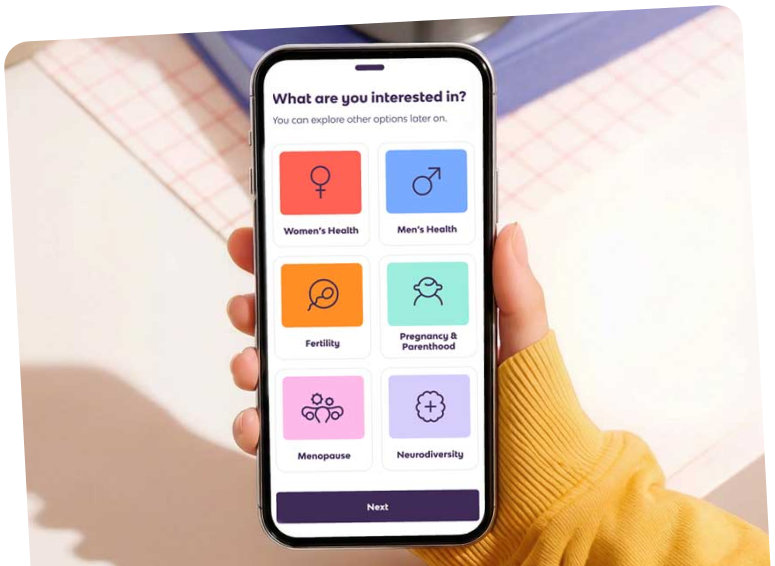
Fertility rarely sits in isolation from the rest of an employee’s health journey. Someone using fertility support today may need pregnancy and parenthood support next year, and menopause or men’s health support later in their career.
Employers increasingly look for a single provider that can support employees across these connected life stages, rather than commissioning a separate point solution for each one.
A direct pathway from fertility into pregnancy and parenthood support, in particular, avoids a gap in care at exactly the moment an employee moves from treatment into early pregnancy, which is when specialist guidance matters most and when disengagement risk is highest if support suddenly stops.

Frequently asked questions
It’s typically offered as part of a broader employee health benefit covering areas such as women’s health, men’s health and pregnancy and parenthood, rather than purchased as a single-issue product.
No. UK law does not require employers to provide fertility support or fertility leave. Many organisations offer it voluntarily to support employee wellbeing and family-building.
No. Reputable providers report only anonymised, aggregated data, such as registration and engagement rates, not individual health information.