-1.png?width=600&height=450&name=Untitled%20design%20(8)-1.png)


Peppy vs PMI: two different jobs, one stronger benefits package
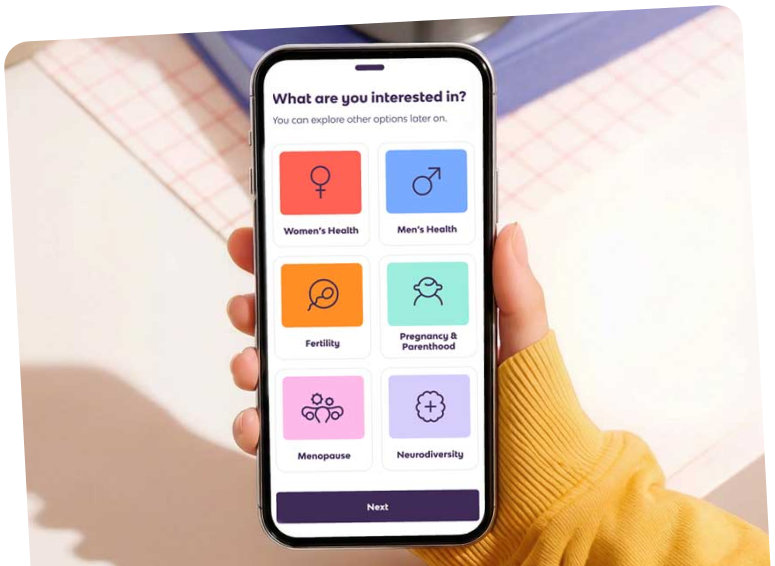
Your PMI covers diagnosis and treatment for a defined list of physical health conditions. Peppy adds the ongoing, specialist clinical care it doesn't, across menopause, fertility, men's and women's health, pregnancy & parenthood and neurodiversity.

What is private medical insurance (PMI)?
PMI stands for private medical insurance, a workplace benefit that covers the cost of diagnosis and treatment for a defined list of conditions, usually faster than the NHS. Most policies work on a claims basis: an employee raises a concern, gets referred to a specialist or diagnostic test, and the insurer pays out against the terms of the policy.
Key point: the gap is depth and scope, not speed. PMI is built to treat a defined, acute condition once it's diagnosed. It typically excludes or caps cover for chronic, ongoing, or life-stage conditions such as menopause, fertility treatment and neurodivergent support, and it rarely includes proactive, condition-specific support for men's or women's health. The people who need that ongoing care most often find out it isn't covered only once they try to claim.
The core distinction
PMI is a treatment benefit. Peppy is a support benefit.
PMI exists to pay the bill once there's a diagnosis, a referral, or a procedure on the table. It's built around acute, defined episodes of care. Peppy exists for everything PMI was never designed to cover: the years of perimenopause before HRT is even on the table, the eighteen months of trying to conceive before a fertility clinic gets involved, the employee who suspects they're neurodivergent but doesn't know where to start, the new parent trying to navigate the first six months back at work.
Employees don't experience their health in "claimable episodes." Peppy meets them in the in-between, where PMI doesn't reach.
.webp?width=1000&height=667&name=iStock-2191738154%20(1).webp)
How they compare
| Feature | Peppy | Your PMI |
|---|---|---|
| What it's for | Ongoing, everyday support and navigation | Diagnosis and treatment of acute/defined conditions |
| Access | Unlimited 1-to-1 chat and consultations, no referral needed | Requires diagnosis, referral, and often pre-authorisation |
| Practitioners | Specialist practitioners (3+ years' experience in menopause, fertility, neuroinclusion, etc.) | Consultants and specialists, accessed via claims process |
| Pre-existing conditions | Fully covered - no underwriting, no exclusions | Often excluded or requires medical history disclosure |
| Confidentiality | Anonymous and confidential - never visible to line manager or HR | Claims can involve HR/finance visibility depending on policy structure |
| Coverage areas | Menopause, fertility, neuroinclusion, men's and women's health, pregnancy & parenthood | Whatever the policy schedule defines - typically surgical, acute, and diagnostic care |
| When employees use it | Continuously - for years if needed, before any diagnosis exists. Proactive | Only once there's something to treat. Reactive |
| Cost structure | Fixed per-employee cost, unlimited usage, paid by the employer | Premiums often rise with claims; excess payments common |
| Best used as | Prevention, early support, day-to-day navigation | Treatment once a condition is confirmed |
Why this matters for HR and Benefits leaders
PMI utilisation is often low precisely because employees don't know they need it yet.
Peppy is where the "not sure if this counts as a medical problem" conversation happens — often before a PMI claim would even be triggered.
PMI doesn't cover the conditions costing UK employers the most in absence and attrition.
Menopause-related absenteeism and presenteeism costs UK businesses an estimated £10.5bn annually - much of that is never treated as a "medical event" PMI would pay out on.
Peppy reduces avoidable PMI claims.
Early, confidential support means fewer employees escalating to a GP referral or a claim for something that could have been managed sooner.
Running both signals genuine investment.
PMI shows employees they're covered if something goes wrong. Peppy shows employees they're supported before it does.Peppy's services
Specialist support across every life stage
Peppy supports your people through whatever health journey they are facing.
From toddler tantrums to fertility concerns, testosterone deficiency to menopause symptoms.


THE PROOF
Real-world impact
70%
of Peppy users feel more positive about their employer because Peppy is offered.
80
Peppy's combined NPS is 80. 70+ is world class.
58%
reduction in severe menopause symptoms within 180 days.
FAQ’s
Private medical insurance. It's the benefit most UK employers already provide for diagnosis and treatment of physical health conditions.
No. PMI typically covers diagnosis and treatment for a defined list of conditions. Peppy adds specialist, ongoing care for life stages such as menopause, fertility and neurodiversity that most PMI policies don't go deep on.
Yes. Peppy has no underwriting and no exclusions for pre-existing conditions, unlike most PMI policies.
No. Beyond statutory sick pay and NHS access, PMI is an optional benefit, though it's a common part of a competitive benefits package for employers with 250+ staff.