-1.png?width=600&height=450&name=Untitled%20design%20(8)-1.png)


The specialist layer your EAP is missing
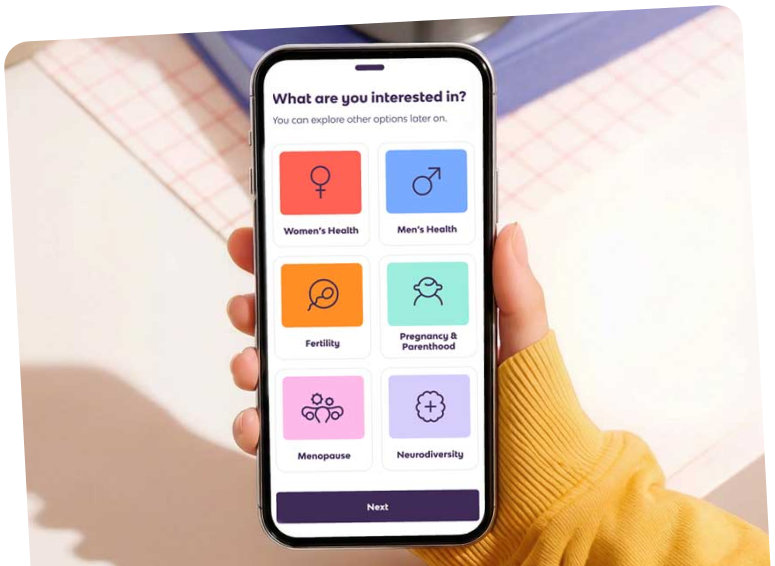
Your EAP gives broad first-line support. Peppy adds the deep, specialist clinical care, across menopause, fertility, men's and women's health, pregnancy & parenthood and neurodiversity.


What is an employee assistance programme?
EAP stands for employee assistance programme. It's a workplace benefit giving employees confidential support for personal and work challenges, typically a helpline, a short course of counselling sessions, legal and financial guidance, and referral into occupational health where needed. Most UK employers already have one, and for broad, first-line support, EAPs do the job well.
The gap is depth. A generalist line can't go deep on menopause, fertility or men's health, and the people who need that most often never call. That's where a dedicated employee healthcare benefit comes in.
How EAP providers compare
UK employers typically source their EAP through providers like Health Assured, Bupa, Vivup or Care First, usually bundled into a wider benefits package. These providers are built for scale: broad availability, a call centre model, short-term counselling. That's genuinely useful for first-line support. What none of them are built for is specialist, ongoing clinical care in a specific area. Whichever EAP provider you use, the structural gap is the same, and it's the gap Peppy fills, sitting alongside your existing provider rather than replacing them.
.webp?width=1000&height=667&name=iStock-2191738154%20(1).webp)
| Feature | Peppy | Your EAP |
|---|---|---|
| Purpose | Specialist, condition- and life-stage-specific support (e.g. menopause, fertility, men's health, neuroinclusion) | Broad, generalist safety net — covers everything from debt advice to bereavement to legal queries |
| Model | Proactive — employees get matched with a named practitioner before things escalate | Reactive — employees call when they're already in crisis |
| Expertise | Practitioners specialised in the specific condition or life stage being supported | Generalist counsellors and advisors, one team for every issue |
| Typical utilisation | App based. Designed specifically to be easy to find, easy to book, and relevant enough that employees actually use it | 3–10% of eligible employees per year |
| Employee awareness | Actively promoted around the moments employees are already searching for help | Only around 1 in 4 employees know their EAP exists |
| Format | Ongoing 1:1 digital access to a named practitioner, plus content and community support | Phone-first, short-term counselling model |
| Depth on specific issues | Built end-to-end around the specific condition, with pathways and referrals in-app | Signposts or refers out for anything beyond short-term generalist support |
| HR reporting | Dedicated Client Success Manager. Clear, condition-specific engagement data employers can act on | Aggregate usage data, hard to tie to a specific benefit ROI |
| Best used as | The targeted layer that drives real engagement and demonstrable ROI on top of that safety net | Foundational, universal safety net |
Peppy's services
Specialist support across every life stage
Peppy supports your people through whatever health journey they are facing.
From toddler tantrums to fertility concerns, testosterone deficiency to menopause symptoms.


THE PROOF
Support people actually use
70%
of Peppy users feel more positive about their employer because Peppy is offered.
80
Peppy's combined NPS is 80. 70+ is world class.
58%
reduction in severe menopause symptoms within 180 days.
FAQ’s
Employee assistance programme. It's the standard first-line wellbeing benefit most UK employers already provide.
No. Most employers keep their EAP and add Peppy as the specialist layer on top.
No. EAPs are a voluntary benefit, not a statutory one, though the Employment Rights Act 2025 is raising expectations around what 'adequate' workplace health support looks like.