-1.png?width=600&height=450&name=Untitled%20design%20(8)-1.png)


Neuroinclusion in the workplace:
A practical guide
for employers

For UK employers, neuroinclusion in the workplace means one thing in practice: building support for neurodivergent employees into policy and everyday management, rather than leaving it to chance or to individual managers to work out on their own. This guide covers what that takes, the business case for doing it, and how Peppy can help.

What is neuroinclusion?
Neuroinclusion is what an organisation does so that neurodivergent employees, including people with autism, ADHD, dyslexia and dyspraxia, get the support they need without having to ask for it first. Neurodiversity describes the difference; neuroinclusion is the organisation's response, built into policy and everyday management rather than left to individual managers to work out on their own.
Neurodiversity in the workplace means designing roles, communication and management approaches that work for a range of cognitive styles from the outset, rather than treating adjustments as exceptions made case by case.
For the fuller breakdown of how neuroinclusion, neurodiversity and neurodivergent relate to each other, see our glossary page.
Neurodiversity at work: why it matters now
The cost of doing nothing
Over 15% of people in the UK are neurodivergent
Neurodivergent employees are already part of every UK workforce, roughly 1 in 7 individuals are neurodivergent, meaning most teams of any size include people who think, process information and communicate differently from the neurotypical norm, whether or not they've disclosed it.
Capable people masking their needs to fit in, avoidable turnover when support isn't there, disengagement that never gets flagged as a wellbeing issue, and in the worst cases, disputes that could have been avoided with earlier support. Get it right, and neuroinclusion becomes a genuine source of advantage.
The shift, from individual accommodation to built-in inclusion – moving first, rather than waiting for an employee to ask – is why neuroinclusion has moved from an HR side project to a board-level DEI and retention priority.
The business case for neuroinclusion
The case for neuroinclusion is a business case as much as an ethical one. For HR and reward teams building a case to leadership, the strongest argument combines all three: neuroinclusion protects the investment already made in hiring and developing talent, while genuinely widening the pool of people who can do their best work for you.
Productivity
Neurodivergent employees often bring strengths in pattern recognition, sustained focus, creative problem-solving and attention to detail. Organisations that actively support these strengths, rather than only managing around perceived weaknesses, tend to see the benefit show up in output and quality.
Retention
Losing a trained, capable employee because reasonable support wasn't in place is an avoidable cost, before you even count the loss of institutional knowledge and the disruption to the rest of the team.DEI credentials
Neuroinclusion is increasingly a marker organisations are measured against – by employees deciding where to work, by clients and partners assessing supplier culture, and by benchmarks like DEI accreditations and employer awards.What good support looks like
Good neuroinclusion support is built into how a team works day to day, not bolted on when someone discloses a diagnosis. It touches four areas.
Flexible working
Focus, sensory needs and energy vary across the day, not a fixed pattern for everyone
Clear communication
Direct and unambiguous as the default, not something people have to ask forManager training
So adjustments are offered proactively and consistently, not down to one manager's experienceEasy access to support
No formal diagnosis or difficult conversation required to ask for what you need.For the full breakdown, what to put in place, in what order, and how to tell if it's working, see our employer's guide to neurodiversity support.
Neurodiversity training
vs. neuroinclusion as an employee benefit
There's no shortage of neurodiversity training on the market. What's harder to find is ongoing support that goes beyond a single workshop.
Most providers in this space, from compliance platforms to specialist consultancies, sell a fixed training module – a session, a certificate, sometimes a policy template. That has value, particularly for baseline awareness, but training alone doesn't help a manager handle a specific, live situation with a specific employee six months later.
Peppy's approach is built around ongoing clinical support rather than a one-off course. Employees and managers can access specialist guidance when a real situation comes up, not just in a training calendar slot. If you're evaluating options, it's worth asking any provider, including us, how support works after the training ends.


How Peppy supports neuroinclusion
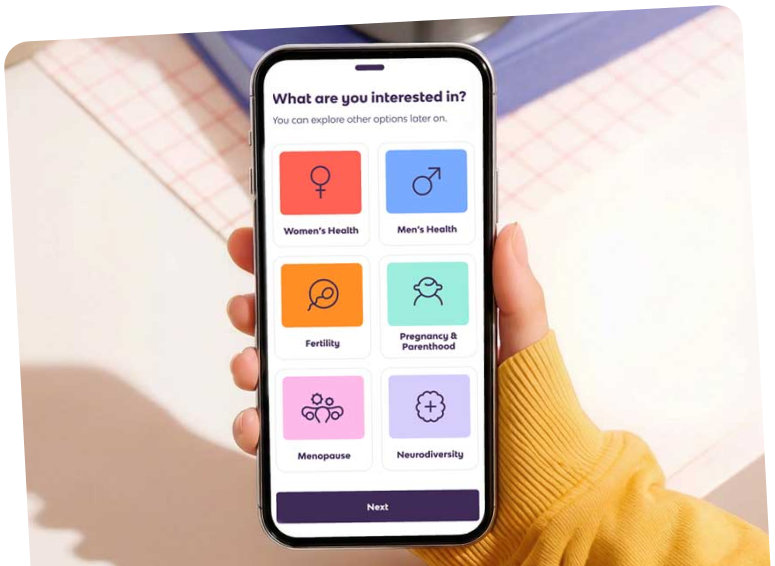
Peppy's neurodiversity service gives employees direct access to specialists who understand ADHD, autism, dyslexia, dyspraxia and related conditions, through one app.
Employees can book a specialist appointment without going through a manager or HR first, get practical strategies for managing their working day, and get support putting together a case for reasonable adjustments if they want one.
Managers and HR teams get a parallel line of support: guidance on how to have these conversations well, and confidence that employees have somewhere confidential to go that isn't occupational health or a formal HR process.
The impact for employers
When employees have confidential, specialist support available without a lengthy referral process, they use it, and use it early, before a manageable issue becomes a harder one to fix. For neuroinclusion specifically, that means adjustments get made sooner, conversations with managers go better, and fewer situations end up needing formal intervention.
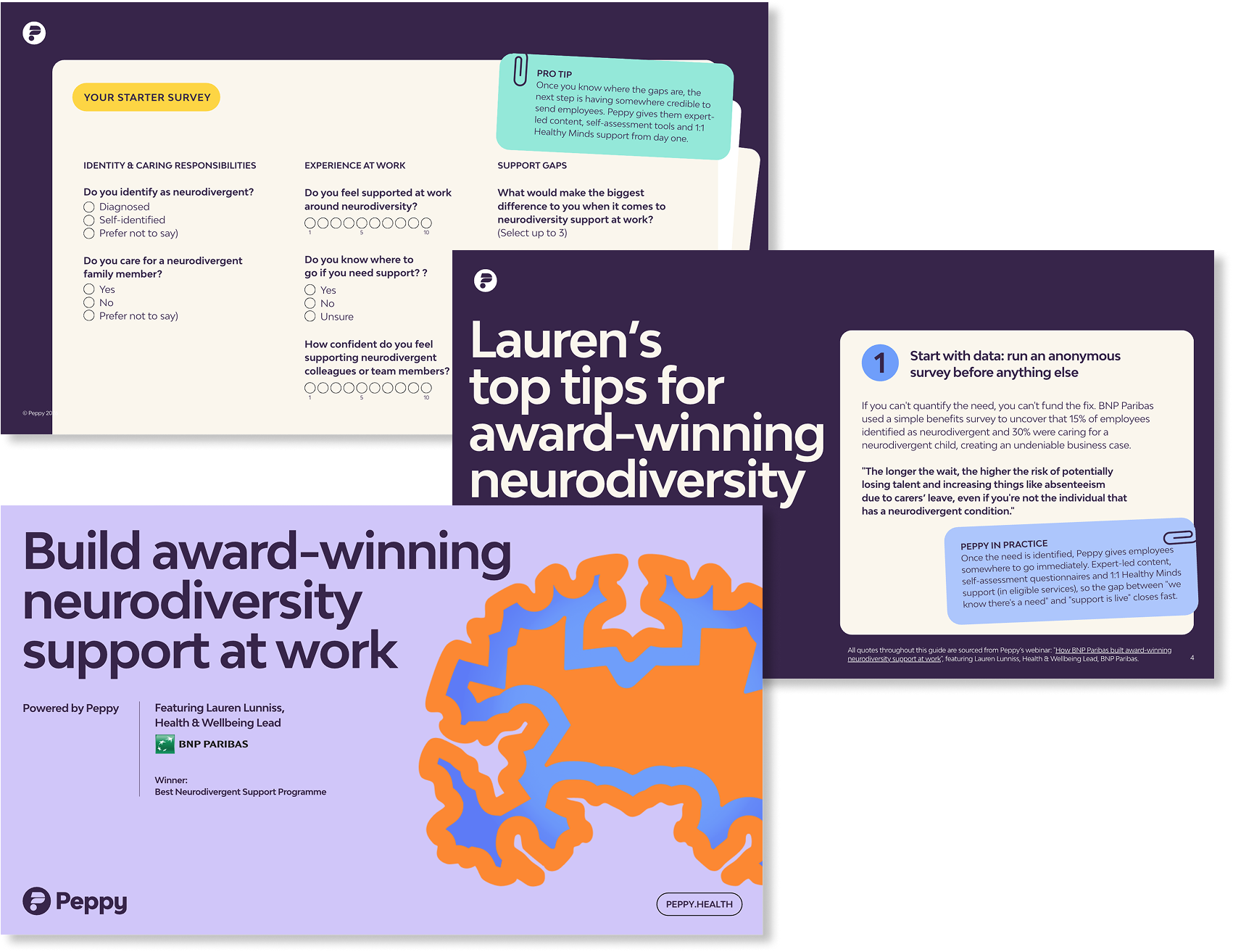
Peppy teamed up with BNP Paribas, who won an award for their neurodiversity support, to put together a guide for employers. The guide contains:
-
Lauren Lunniss's top tips: the steps behind an award-winning programme
-
A starter survey template your team can use immediately: with questions that give you actionable data
-
How Peppy powers neurodiversity support: what's included, what it covers and what it delivers
Neuroinclusion in the workplace means designing policies, management practices and day-to-day working environments so that neurodivergent employees, including those with autism, ADHD, dyslexia and dyspraxia, can do their best work without needing to ask for individual exceptions.
Neurodivergent employees are already present in every workforce, whether or not they've disclosed it. Employers who build support in proactively see the benefit in retention, engagement and reduced risk, rather than only responding after an issue has already affected someone's work or wellbeing.
Common adjustments include flexible working hours, written instructions alongside verbal ones, quiet or low-sensory workspaces, extra processing time in meetings, and clear, direct communication as a default. The right adjustments depend on the individual, so a straightforward, low-barrier way to ask for support matters more than any single fixed list.