-1.png?width=600&height=450&name=Untitled%20design%20(8)-1.png)



Menopause support for employers in 2026: what it means
Menopause support for employers in 2026 means giving staff clinician-led, on-demand access to menopause care through their workplace, rather than leaving them to navigate GP waiting lists alone. For most large UK employers, that now takes the form of a digital benefit: nurse-led virtual consultations, symptom tracking, and manager guidance, delivered through an app or platform the employee can use whenever they need it.
This isn't a wellbeing add-on. Roughly 13 million women in the UK are currently perimenopausal or menopausal, and the majority are of working age. Employers who get menopause support right see it reflected directly in retention, engagement, and how many senior women stay in the workforce through their forties and fifties.
Why menopause support in the workplace matters more in 2026
Menopause support in the workplace matters because untreated symptoms are now one of the most common reasons women reduce their hours, turn down promotion, or leave a job altogether. Fatigue, brain fog, and disrupted sleep don't stay at home. They show up in performance reviews, in sickness absence data, and in exit interviews, often without ever being named.
Three shifts are pushing this up the priority list for HR and benefits teams this year:
- Demographic pressure. The average age of menopause is 51, which puts it squarely in the years many organisations are trying hardest to retain senior talent.
- Rising expectations. Menopause has moved from a taboo subject to a benefits-package expectation, particularly among mid-career candidates comparing offers.
- Diagnosis gaps in primary care. GP appointment waits mean many employees go months without proper support, so workplace access has become a genuine safety net rather than a nice-to-have.
What does digital menopause support actually involve?
Digital menopause support gives employees direct access to menopause-trained clinicians through an app, without needing a GP referral or a long wait. In practice, that usually includes:
- Nurse-led virtual consultations with clinicians who specialise in menopause, not generalist telehealth
- Personalised symptom and treatment guidance, including HRT navigation where relevant
- Ongoing check-ins, rather than a single one-off session
- Manager and line-leader guidance, so support doesn't rely on an employee having already disclosed their symptoms
The difference between this and a generic EAP or wellbeing app is specificity. A menopause-trained nurse can talk through HRT options, blood test results, and symptom patterns in a way a general wellbeing line simply isn't set up to do.
How menopause support improves employee wellbeing and retention
Menopause support improves retention because it removes the two biggest reasons menopausal employees quietly step back from their careers: unmanaged symptoms and a workplace that doesn't seem to notice. When employees can access clinical support quickly, symptoms are treated earlier, absence tends to fall, and fewer people feel they have to choose between their health and their career progression.
For HR and benefits leaders building the business case, three outcomes are worth tracking:
- Retention of senior women. Menopause-related attrition disproportionately affects people already in, or close to, leadership roles.
- Reduced short-term absence. Untreated symptoms such as poor sleep and anxiety are common drivers of sporadic sickness absence.
- Engagement and trust. Visible, well-communicated support signals that the organisation takes women's health seriously, which shows up in engagement survey scores well beyond the employees who use the benefit directly.
What should a workplace menopause policy include?
A workplace menopause policy should set out how the organisation supports employees experiencing menopause symptoms, cover manager responsibilities, and point clearly to the practical support on offer. At minimum, that means:
- A clear statement that menopause is a workplace health issue, not a personal one to be managed quietly
- Guidance for managers on how to respond to a disclosure and what adjustments are reasonable
- Signposting to any clinical or digital support the organisation provides
- A commitment to review the policy against employee feedback and usage data
Policy alone rarely changes outcomes. It works best paired with a support route employees can actually use, which is where digital, clinician-led benefits fit in.
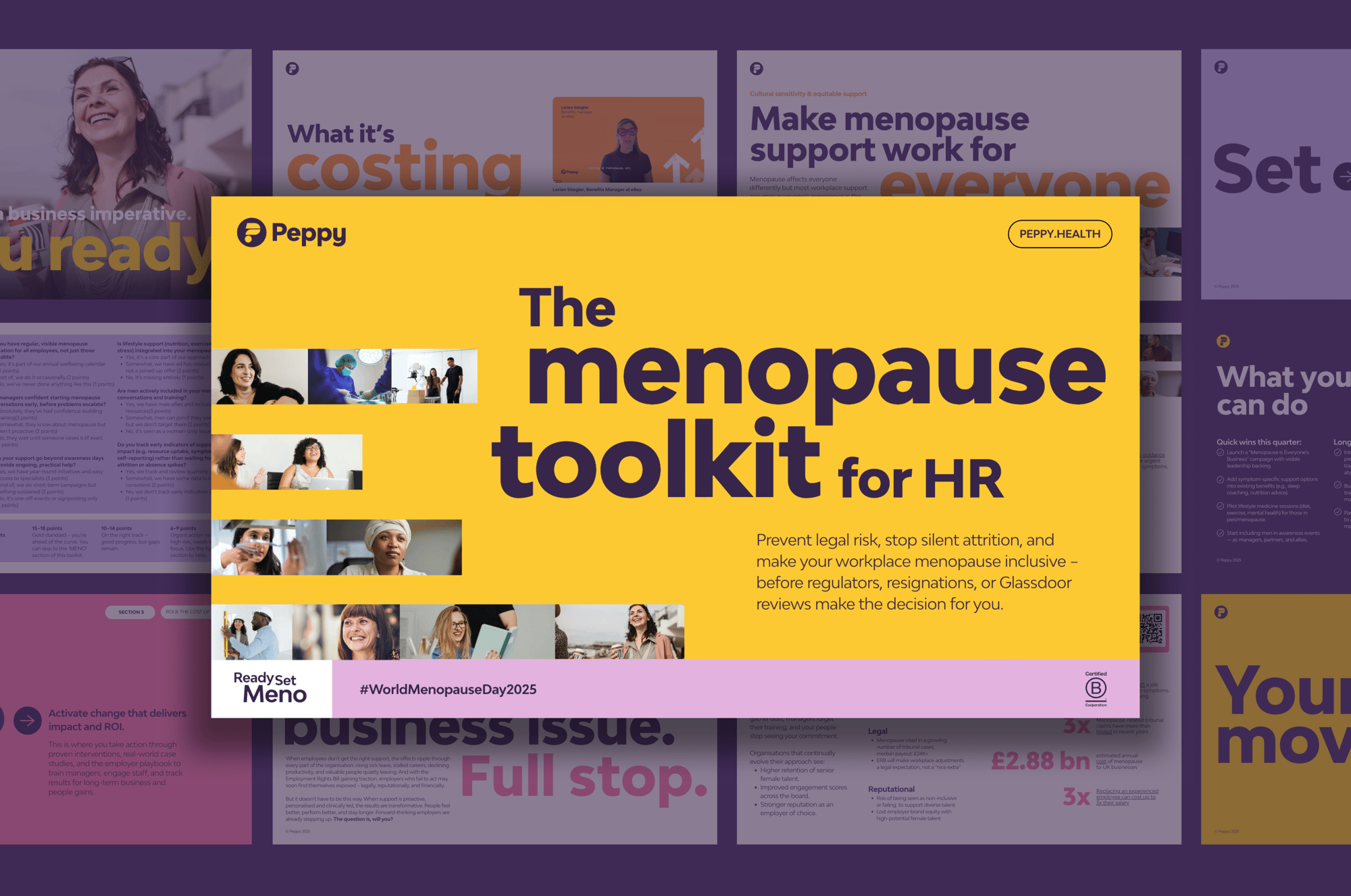
How Peppy supports menopause in the workplace
Peppy gives employees direct, app-based access to menopause-trained nurses and clinicians for ongoing, personalised support, alongside manager training and guidance for HR teams. Support isn't a single consultation. Employees can return for follow-ups as symptoms and treatment change, and HR teams get anonymised usage insight to understand how the benefit is landing across the organisation.
For employers, that translates into:
- Faster access to menopause-specialist care than most employees would get through the NHS alone
- A consistent standard of support across every location and team, not dependent on individual manager awareness
- Data that helps benefits teams demonstrate impact
FAQs
How do I support menopause in the workplace? Start with manager training so symptoms are recognised and disclosures are handled well, put a written menopause policy in place, and give employees a direct route to clinical support, such as a digital nurse-led service, rather than relying on informal or ad hoc adjustments.
What is digital menopause support? Digital menopause support gives employees access to menopause-trained clinicians through an app or online platform, typically including consultations, symptom guidance, and ongoing follow-up, without requiring a GP referral.
Why should employers offer menopause support as a benefit? Because unmanaged menopause symptoms are a leading driver of reduced hours, missed promotions, and resignations among employees in their late 40s and 50s, offering structured support directly protects retention of experienced staff.
Is menopause support only relevant to large employers? No, but larger employers with 500+ staff are more likely to have enough menopausal employees at any one time to justify a dedicated digital benefit rather than ad hoc, case-by-case support.