-1.png?width=600&height=450&name=Untitled%20design%20(8)-1.png)



Workplace men's health support services are digital, clinician-led benefits that give male employees confidential access to specialists, health information, and ongoing support for physical and mental health concerns, without needing to book time off or explain why to a manager. For HR and benefits leaders, they close a long-standing gap in workplace wellness: most benefits packages are built around conditions employees are comfortable disclosing, and men's health rarely fits that model.
This guide explains what workplace men's health support looks like, why stigma is the biggest barrier to men using existing benefits, and how a dedicated service fits alongside, rather than replaces, the other health benefits many employers already offer.
What is workplace men's health support?
Workplace men's health support is an employer-funded benefit that gives employees confidential, on-demand access to clinicians who specialise in men's physical and mental health. It typically covers:
- Physical health concerns, including prostate health, testosterone and hormone-related symptoms, fertility, weight and cardiovascular risk, and sexual health.
- Mental health support, including stress, low mood, anxiety, and the emotional impact of health diagnoses.
- Life-stage transitions, such as new fatherhood, midlife health changes, and the practical and emotional load of caring for family members.
- Ongoing guidance, delivered through 1:1 chat or video appointments with named clinicians.
The defining feature is confidentiality. Employees access support through an app or private portal, separate from line managers and HR. This removes the two biggest reasons men give for not seeking help at work: fear of judgement, and fear that a health disclosure will affect how they're seen professionally.
Why employers need a men's health strategy
The stigma gap is a benefits utilisation problem
Most employers already offer some form of health benefit, whether that's private medical insurance, an EAP, or a wellness app. The gap isn't availability. It's usage. Men are consistently less likely than women to visit a GP, disclose mental health symptoms, or use employer wellness resources, even when those resources are free and well-publicised. This pattern is shaped by social norms around masculinity and self-reliance, and it doesn't shift simply because a benefit exists. It shifts when the benefit is designed around the barrier.
For HR leaders, this shows up as absence linked to undiagnosed or unmanaged health conditions, presenteeism, and late-stage health crises that could have been addressed months earlier through routine, confidential support.
Generic wellness programmes don't reach men
Broad workplace wellness programmes, such as step challenges, mindfulness apps, and general EAP helplines, are useful, but they're built for engagement patterns that don't match how most men approach health support. A men's-specific service works differently because it:
- Uses language and framing men are more likely to respond to (practical, direct, symptom-led rather than wellness-led).
- Offers a named clinician relationship rather than a different responder each time, which builds the trust needed for follow-up conversations.
- Treats the workplace as a low-friction entry point into care that men might otherwise delay for years.
It complements, rather than duplicates, EAP and PMI
Most employers already have an EAP and private medical insurance in place. Workplace men's health support isn't a replacement for either. It's the specialist layer that sits on top. An EAP is built for short-term, generalist counselling and crisis support, not ongoing care for a specific symptom or condition. PMI covers diagnosis and treatment once something is already identified, but it isn't designed for the earlier, exploratory conversation a man might need before he's ready to call it a medical issue at all.
Men's health support fills that space: a named clinician an employee can go to first, who can either resolve the concern directly or point them toward the right EAP or PMI pathway with more clarity and confidence than they'd have had alone. Positioning it this way, as the layer that makes existing benefits work harder rather than a separate add-on, makes it easier for employees to understand when and why to use it.
What good workplace men's health support looks like
When evaluating a provider, HR and benefits leaders should look for:
- Confidential, direct-to-employee access. No manager visibility, no HR case notes, and no requirement to disclose a reason for using the service.
- Clinician-led care, not just information or a symptom checker. Employees should be able to speak to a real specialist and get a plan.
- Breadth across physical and mental health. Men's health concerns rarely arrive in isolation; a physical symptom often carries anxiety alongside it.
- Fast access, typically same-day or next-day appointments, so employees don't disengage while waiting.
- Manager and HR guidance on how to talk about the benefit without making it feel like a performance or attendance issue.
- Usage reporting that shows engagement trends at an aggregate, anonymised level, so HR can demonstrate ROI without compromising individual privacy.
How to introduce men's health support without adding to the stigma
Rolling out the benefit well matters as much as choosing the right provider. A few principles help:
- Launch it as a health benefit, not a "men's issues" campaign. Framing it around support and access, rather than problems and deficits, avoids reinforcing the idea that using it signals weakness.
- Normalise it through senior visibility. When male leaders reference using or supporting the service, it does more to shift culture than any amount of internal comms copy.
- Integrate it into existing benefits communications, including open enrolment, new starter onboarding, and family benefits materials, rather than launching it as a standalone, easily-missed initiative.
- Give line managers a script for the handful of moments this benefit is most likely to come up: return-to-work conversations, flexible working requests, and wellbeing check-ins.
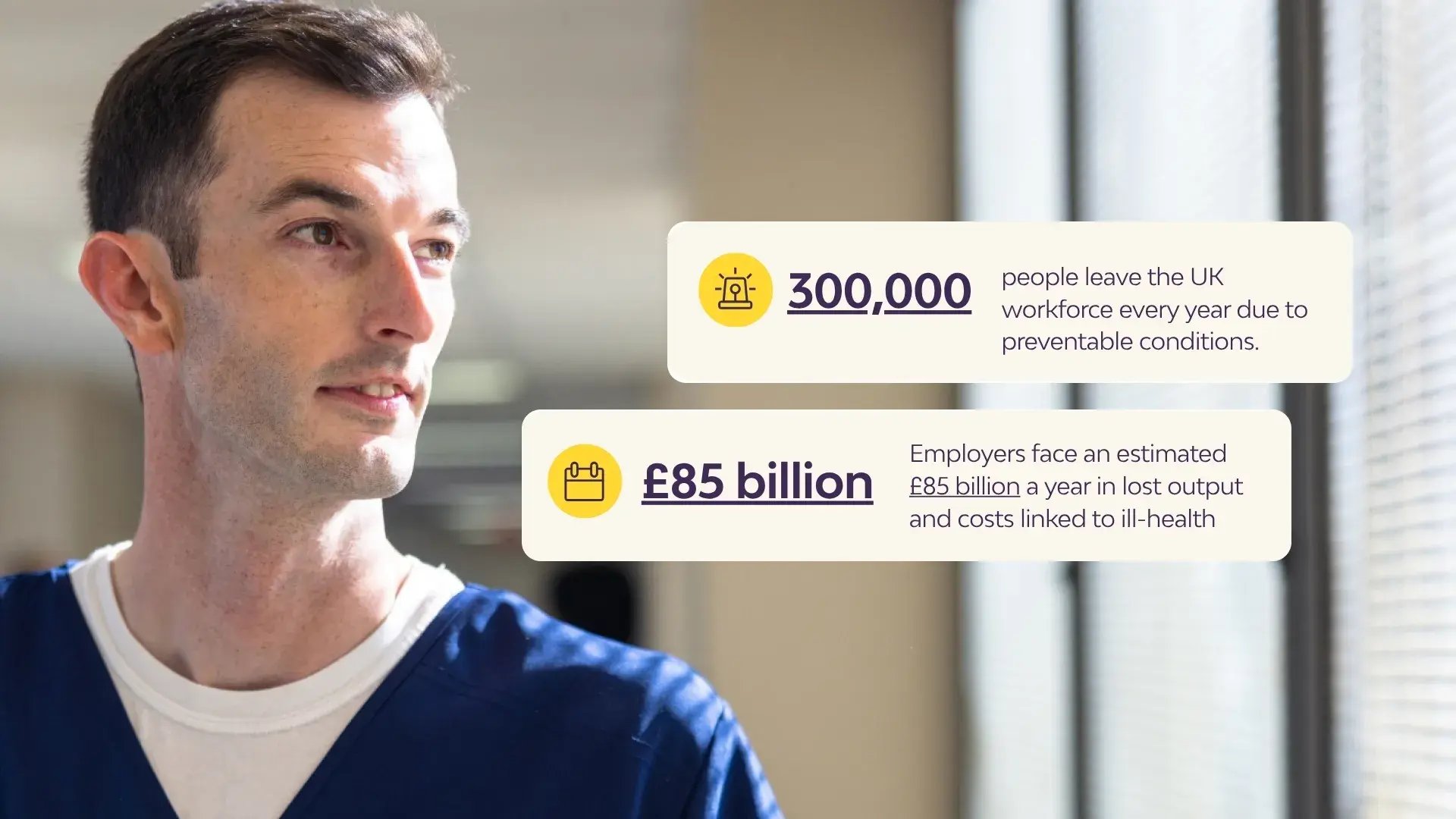
The business case for HR and benefits leaders
Workplace men's health support is a wellbeing investment, but it's also a risk and retention lever. Employees who can address a health concern early, confidentially, and without taking time off are less likely to reach a point of extended absence. Employers offering visibly comprehensive, gender-inclusive health benefits are better positioned in a competitive talent market, particularly as employees increasingly evaluate benefits packages for how well they cover the full span of a working life.
Frequently asked questions
What is workplace men's health support? Workplace men's health support is a confidential, employer-funded benefit that connects male employees with clinicians for physical and mental health concerns, delivered digitally through an app or private portal without manager or HR visibility.
Why do men use workplace health benefits less than women? Social norms around masculinity and self-reliance mean men are statistically less likely to disclose symptoms or seek help, even when free benefits are available. The barrier is stigma and design, not access or cost.
How is men's health support different from a general EAP? A general EAP typically offers short-term, generalist counselling and crisis support. Men's health support services provide ongoing, named clinician relationships covering both physical and mental health, with a focus on early, judgement-free engagement.
Does men's health support replace family health benefits? No. It complements existing family and parental benefits by giving individual employees a confidential space for personal health concerns that sit alongside, rather than inside, household or family-level policies.
How can HR measure the success of a men's health benefit? Through anonymised usage data, employee feedback, and, over time, indicators like reduced absence linked to late-diagnosed conditions. Providers should offer aggregate reporting that protects individual confidentiality while showing engagement trends.
Is workplace men's health support only for physical health? No. Most services cover both physical concerns (such as prostate health, hormone changes, and cardiovascular risk) and mental health (such as stress, low mood, and the emotional impact of life-stage transitions like new fatherhood).