-1.png?width=600&height=450&name=Untitled%20design%20(8)-1.png)


.webp?width=300&name=iStock-2191738154%20(1).webp)
What employee benefits help companies attract and retain talent in competitive sectors like accounting or finance?
Specialist, condition specific health support is what separates employers who retain finance talent from those who lose it. Private medical insurance and an EAP are the baseline. What really improves talent attraction and employee retention is proactive support that fits around every employees individual needs and life stages.
Accounting and finance are some of the hardest sectors to hold on to good people. Deadline cycles, audit season, long hours during reporting periods. The work is relentless in a way other departments don't always understand, and it takes a toll.
If you're an HR or benefits leader trying to win the talent attraction and employee retention battle in competitive industries like these, the standard benefits package isn't enough on its own.
Why finance and accounting talent is so hard to keep
Turnover in accounting firms and finance companies is expensive and disruptive. Losing a qualified accountant mid-audit cycle means lost knowledge, a scramble to backfill, and pressure on the rest of the team. Recruiters in this space report shorter tenures and more competitive counteroffers than almost any other white collar sector.
Pay matters, but it's rarely the deciding factor once a role is on the table. Candidates weighing offers are looking at how a company supports them day to day, through whatever lifestage or health concern they're going through.
Which employee benefits matter most for talent attraction and retention
Specialist health support
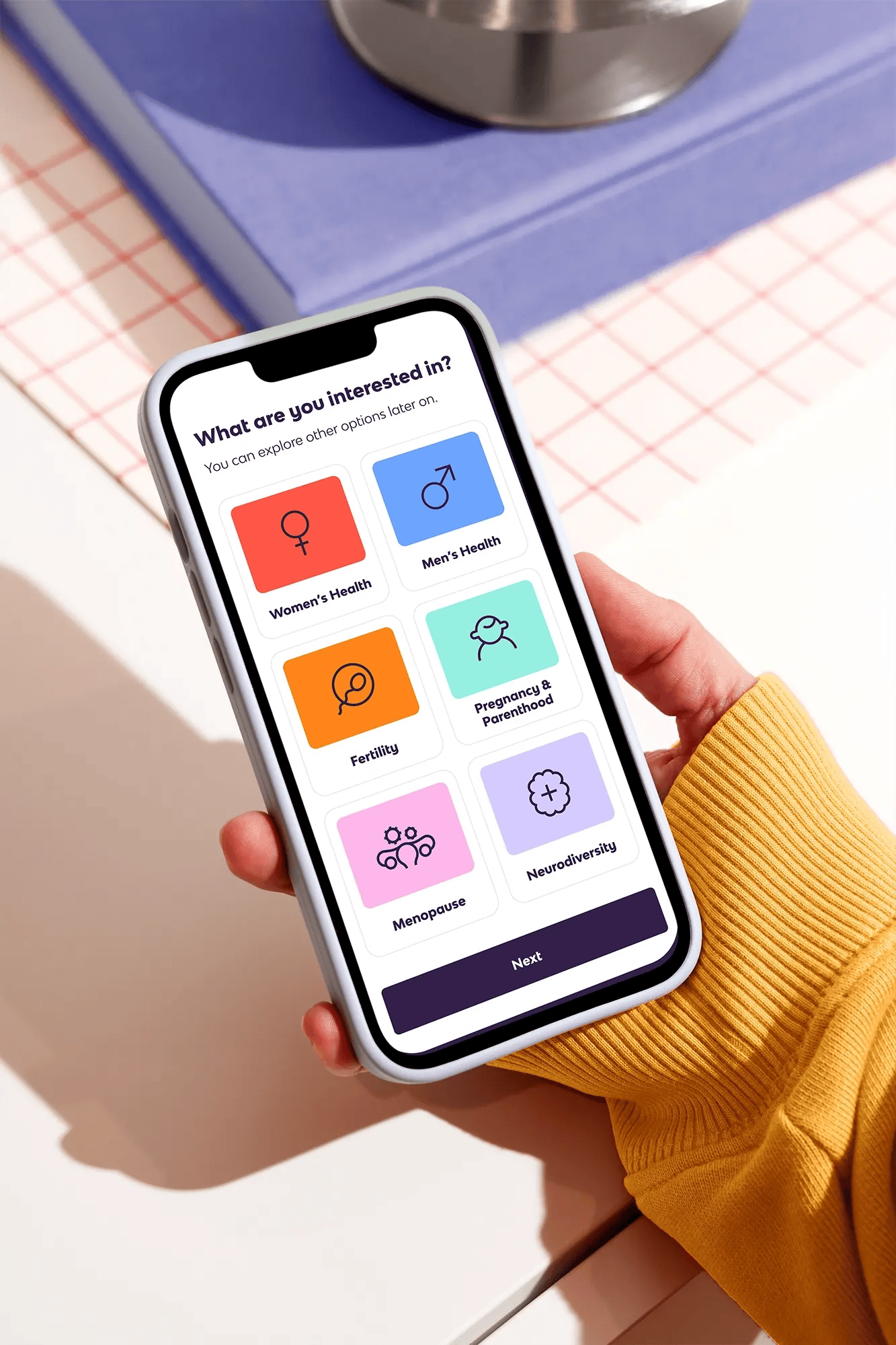
An EAP gives people a helpline. Private medical insurance gives them a referral. Neither gets someone through the specific health challenge they're dealing with right now, whether that's menopause symptoms disrupting concentration during close week, a fertility journey running alongside a busy season, or a new diagnosis they don't know how to manage at work.
Employees in high pressure roles need support that understands their reality. Practical guidance they can act on between meetings, not a leaflet or a six week+ wait for an appointment.
Support that fits around the job
Finance professionals don't have time to take an afternoon off for a wellbeing session in the middle of quarter end. Benefits that require people to step away from their desks get quietly ignored. The ones that get used are flexible: something someone can access in a fifteen minute window, from their phone, without booking weeks in advance.
Manager confidence
A benefit only works if people know it exists and feel comfortable using it. In finance teams, where presenteeism is common, that often comes down to managers. If a manager knows how to spot when someone's struggling and can point them to the right support without making it a big conversation, employees are far more likely to actually use what's on offer.
How specialist support fits with existing benefits
None of this means ripping up your current package. PMI and an EAP still matter. They cover the basics and give people a safety net. What's missing for most accounting firms and finance companies is the layer in between: proactive, specialist support that catches problems before they become a reason to leave.
Think of it as filling the gap between "we have a benefit for that" and "someone actually got help." That gap is where retention is won or lost in competitive industries like finance and accounting.
FAQ
What employee benefits help companies attract and retain talent in competitive sectors like accounting or finance?
Specialist health support that addresses specific conditions, flexes around deadline heavy work, and is backed by confident managers. This sits alongside PMI and an EAP rather than replacing them.
Why do accounting firms and finance companies struggle with retention?
Deadline cycles and audit season create sustained pressure that standard benefits packages don't account for, pushing employees toward competitors offering more practical, day to day support.
Do finance employees actually use wellbeing benefits?
Only if the benefit fits around their workload. Anything requiring time away from a desk during busy periods tends to go unused, while flexible, on demand support gets picked up.
Checklist for benchmarking your benefits package
- Does our health support address specific conditions, or just point people toward generic care?
- Can employees access it without taking time away from their desk?
- Do our managers know how to point someone toward it without it becoming a formal HR process?
Employers who can answer yes to all three are the ones building a reputation as a good place to work in a sector where that reputation is hard won and easily lost.